Khaptad National Park Trek
- DURATION: 12 DAYS


“The Secret Garden of Nepal: A Spiritual and Ecological Odyssey to Khaptad National Park Trek”

Trekking in Nepal is often synonymous with the bustling trails of Everest or the classic hospitality of the Annapurnas. The world knows the name “Annapurna” before it learns to walk. But for those who seek the silence of the ancients, the raw, untamed soul of the Himalayas, and a connection with the earth that borders on the mystical, the Far West whispers a different name: Khaptad.
The Khaptad National Park Trek is not merely a physical transition from the chaos of Kathmandu to the tranquility of the hills; it feels like a time warp. It is a journey back to an era where nature dictates the rhythm of life, and where the modern world dissolves, replaced by the rhythmic chanting of hermits, the rustle of vast oak forests, and the panoramic, stoic gaze of the Api and Saipal Himalayan ranges.
I remember my first journey to Khaptad. It was a crisp October morning when the dust of the Terai lowlands gave way to the verdant hills of Doti. The air changed—it became thinner, crisper, carrying the scent of pine and damp earth. This wasn’t just a vacation; it felt like a pilgrimage. Here, in this remote corner of the Seti Zone, lies a protected area spanning four districts: Bajhang, Bajura, Doti, and Achham. It is a land where a revered sage meditated for fifty years in absolute solitude, a place known as the “Garden of Herbs.”
We will traverse every aspect of this moderate yet profound journey. We will blend first-hand narrative with the logistical precision you need to navigate this remote corner, covering everything from the Khaptad National Park Trek cost and Khaptad National Park Trek difficulty, to a detailed Khaptad National Park itinerary and essential Khaptad National Park travel tips.
The Soul of the Land: History, Myth, and the Legend of Khaptad Baba
To understand Khaptad, you must understand the man who gave it its name.
The Saint Who Moved the Mountains
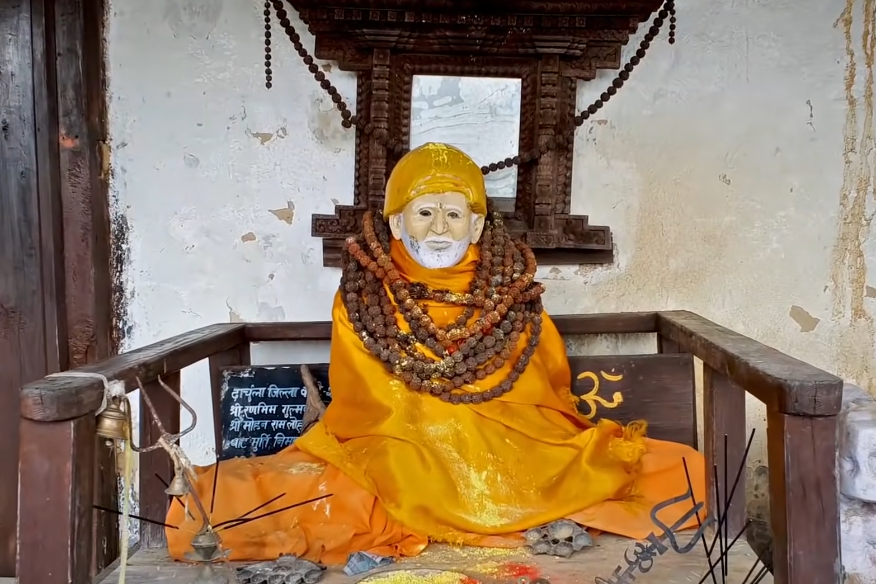
In the late 1940s, a hermit named Khaptad Baba (born Swami Shree Khaptadanan) left his life in the Indian subcontinent to wander the Himalayas. He traveled extensively, searching for a place of ultimate solitude—a spiritual powerhouse where he could meditate undisturbed. After years of wandering, he settled on the rolling plateaus of what is now the park.
For fifty years, he lived in a humble hut, meditating, fasting, and advocating for a life of simplicity and vegetarianism. His spiritual reputation grew so vast that pilgrims, politicians, and commoners alike trekked days just to catch a glimpse of him or seek his blessings. His influence was such that in 1984, when the government established the national park, it was named in his honor. Even today, the Khaptad Baba Ashram stands as a testament to his legacy. It is a small, unassuming structure that radiates a profound, heavy silence. Visitors often report feeling an inexplicable sense of calm upon entering the grounds.
The Spiritual Geography
The park is not just a reserve for wildlife; it is a tantric landscape. The Triveni Temple, where three rivers meet, is considered the junction of the cosmic, terrestrial, and infernal realms. It is believed that bathing here during the full moon of June (Ganga Dashahara) washes away the sins of a lifetime. This deep spiritual overlay makes the Khaptad National Park Trek a unique experience compared to purely scenic hikes like the Poon Hill trek.
Ecological Marvel: The “Garden of Herbs”
Beyond the spiritual, Khaptad is an ecological wonderland. It represents a transition zone between the eastern and western Himalayas, creating a unique biodiversity hotspot.
The Medicinal Treasure Trove
Botanists and herbalists revere this park. It is said that Khaptad Baba identified over 350 species of medicinal herbs here. The park is home to 224 species of medicinal plants, including the highly valued Yarshagumba (Cordyceps sinensis), which grows in the high alpine meadows. During the Khaptad National Park spring trekking season (March-May), the meadows explode into a carpet of color. Rhododendrons of various hues—red, white, and pink—bloom against the stark green of the oak forests. Primulas, irises, and gentians carpet the ground.
The Fauna of the Far West
While tigers and rhinos rule the lowland Terai, the Khaptad National Park wildlife is adapted to the rugged highlands. The park is a sanctuary for the Musk Deer, an elusive creature hunted for its musk pod. If you are lucky and quiet, you might spot the Leopard or the Himalayan Black Bear foraging in the dawn mist. The birdlife is prolific, with over 270 species recorded. Keep your eyes peeled for the Danphe (Himalayan Monal), the national bird of Nepal, with its iridescent plumage flashing through the trees. For birdwatching enthusiasts, the Khaptad National Park birdwatching opportunities are world-class, offering sightings of the Impeyan Pheasant, Khalij Pheasant, and various species of flycatchers and thrushes.
Comparing the Giants: Khaptad National Park vs. Rara National Park
Trekkers often debate between visiting Khaptad or heading further west to Rara National Park. While both are in the Far West and offer an off-the-beaten-path trekking in Nepal experience, they offer starkly different vibes.
The Vibe Check
Accessibility and Trekking Conditions
Verdict
If you are seeking spiritual solace, botany, and endless views of the Api and Saipal Himal range, choose Khaptad. If you want the serenity of a massive lake mirrored in the sky, choose Rara. However, for a truly immersive cultural experience, the villages en route to Khaptad (Doti region) offer a distinct cultural flavor that is less commercialized than the Jumla-Rara route.
Best Time to Visit: A Weather Month-by-Month Breakdown
Choosing the right time for the Khaptad National Park weather is crucial. The Far West has a more volatile climate than central Nepal due to its proximity to the Indian plains and the monsoon corridor.
Spring (March – May): The Season of Life
Summer/Monsoon (June – August): The Rainy Retreat
Autumn (September – November): The Season of Clarity
Winter (December – February): The Cold Silence
A Detailed 12-Day Itinerary: The Classic Route
This itinerary is designed for a moderate trekking difficulty level. It balances acclimatization with exploration. The total Khaptad National Park Trek duration is typically 10 to 12 days including travel.
Day 1: Arrival in Kathmandu – The Gateway to the Himalayas
Altitude: 1,400m
Activity: Arrival & Orientation
Upon landing at Tribhuvan International Airport, the sensory overload of Kathmandu hits you immediately. The horns, the dust, the smell of spices. Our team will transfer you to your hotel in the tourist hub of Thamel. In the evening, we conduct a comprehensive trek orientation. We discuss the Khaptad National Park permit regulations, check your gear, and introduce you to your guide. We provide a Khaptad National Park trekking map and go over the daily segments.
Narrative: Sipping warm ginger tea in the hotel lobby, the excitement builds. We are trading the city noise for the wind songs of the Far West.`
Day 2: Kathmandu Sightseeing – Immersion in Culture
Altitude: 1,400m
Activity: UNESCO World Heritage Sites
Before flying to the Far West, we connect with the spiritual heart of Nepal. We visit Pashupatinath, the holiest Hindu temple complex on the banks of the Bagmati River. We watch the Sadhus (holy men) meditate and the cremation pyres smoke—a reminder of the impermanence of life. We then visit Boudhanath, the massive white stupa adorned with the all-seeing eyes of the Buddha. This day sets the tone for the spiritual journey awaiting you at Khaptad Baba Ashram. We also finalize the Khaptad National Park entry fee payments.
Day 3: Fly to Dhangadhi – Crossing into the Terai
Altitude: 109m (Dhangadhi)
Activity: 1-hour flight + Sightseeing
We take an early morning flight. As the plane banks west, the snow-capped peaks of the Langtang and Manaslu ranges give way to the flat, green plains of the Terai. Dhangadhi is a bustling commercial hub in the Far West. The heat is palpable. We visit the local Tharu villages. The Tharu people have a rich culture and an innate resistance to malaria, which historically allowed them to settle in these dense forests. We may also visit the Aircraft Museum if time permits.
Tip: Stay hydrated. The transition from 1,400m to 109m is drastic and can make you feel sluggish.
Day 4: Drive to Jhingrana – The Ascent Begins
Altitude: 2,300m
Activity: 7-8 hour scenic drive
This is a long, bumpy, yet incredibly scenic drive. We head towards Silgadhi, the administrative headquarters of Doti District. The road is being paved but remains rough in sections. We climb from the sweltering lowlands into the cooler mid-hills. As we ascend, the view of the Seti River valley below is breathtaking. We pass through small villages perched on ridges, witnessing traditional farming lifestyles—men plowing fields with oxen, women carrying heavy loads of fodder. We reach Jhingrana late afternoon, our starting point for the trek.
Experience: The air cools significantly. You take your first deep breath of mountain air. Jhingrana is a small hamlet. Here, we meet our porters and cook staff (if doing a camping trek).
Day 5: Trek to Bichpani – Into the Forest
Altitude: 2,905m
Activity: 5-6 hour trek
The real trek begins today. The trail from Jhingrana to Bichpani is a steady uphill climb. It is a test of stamina. We leave the human settlements behind and enter dense forests of oak, rhododendron, and chir pine. The silence here is profound, broken only by the crunch of boots on gravel and the call of the Kalij pheasant.
The Narrative: The climb is relentless. We stop for a packed lunch beside a crystal-clear stream. The water is ice-cold and refreshing. As we ascend, the trees become stunted and moss-covered, signaling our approach to the sub-alpine zone. Bichpani, meaning “Twenty-two waters,” is a serene campsite. It’s colder here, so we gather around the fire, listening to the sounds of the night jungle.
Day 6: Trek to Khaptad National Park – The Emerald Plateau
Altitude: 3,020m
Activity: 3-hour trek
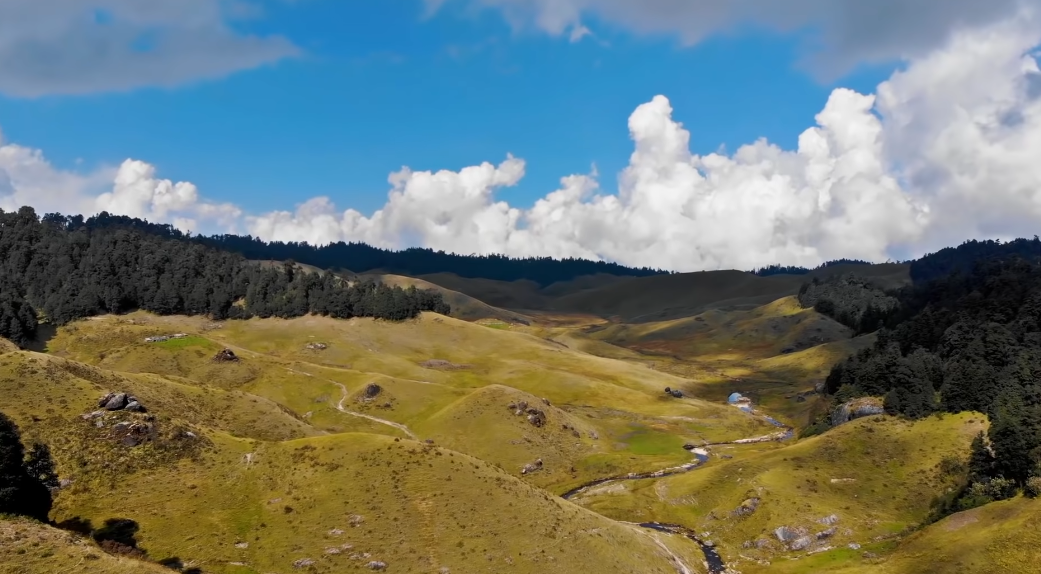
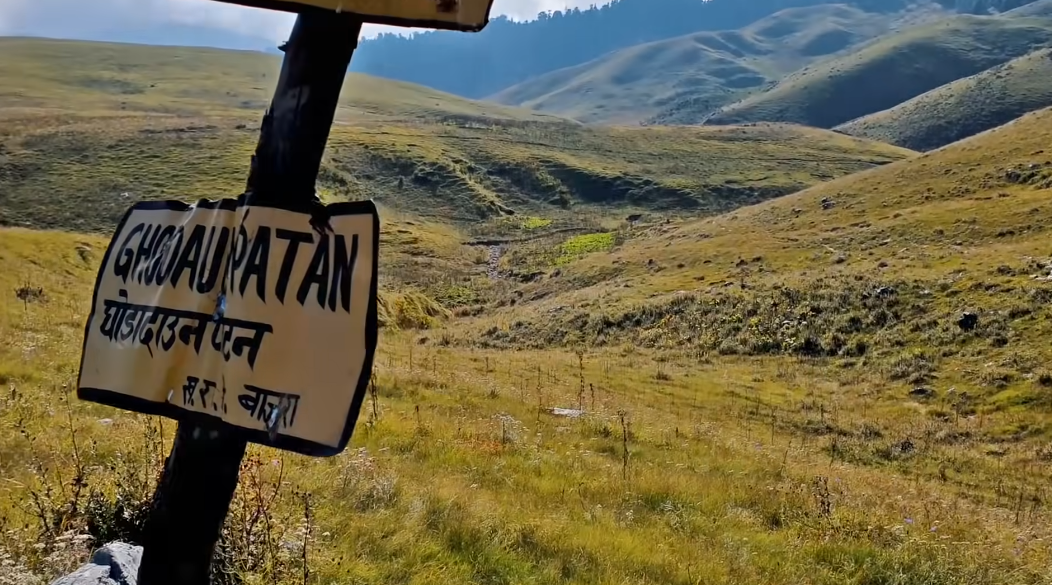
Today is shorter, allowing us time to acclimatize. The forest opens up suddenly. You step out of the shadows and onto the vast, rolling green grasslands that Khaptad is famous for. The view of the Khaptad Daha (Lake) against the backdrop of the Api Himal range is breathtaking. It feels like stepping into a Studio Ghibli movie. We settle into our basic teahouse or camp setup near the park headquarters.
Sensory Detail: The wind here is constant. It whips through the grass, creating waves of green. The sky feels closer.
Day 7: Explore Khaptad – The Ashram and the Lake
Altitude: 3,020m
Activity: Sightseeing and Meditation
We dedicate this day to the spiritual core of the park. We hike to the Khaptad Baba Ashram. It is a simple structure—a mud hut and a small shrine. The meditation stone where the guru sat is still there. We spend a moment in silence. We then walk to Khaptad Daha. The lake is surrounded by huge reeds and is considered holy. Locals believe there is a giant serpent dwelling in its depths.
Note: Remember, this is a strictly vegetarian and non-alcoholic zone. The purity of the environment is palpable.
Day 8: Further Exploration – Sahasralinga and Nagdhunga
Altitude: 3,200m (Highest Point)
Activity: 3-4 hour hike
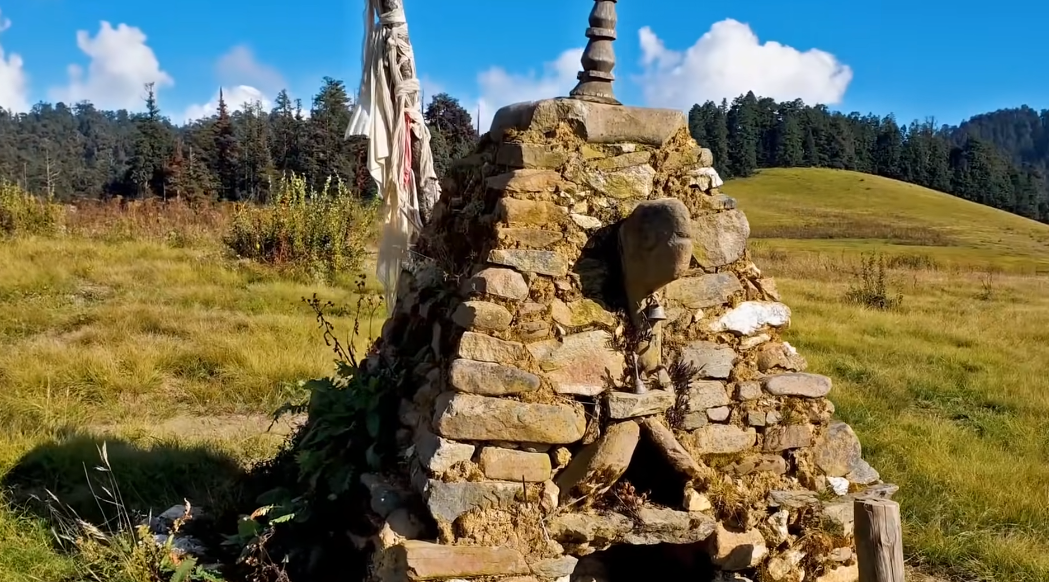
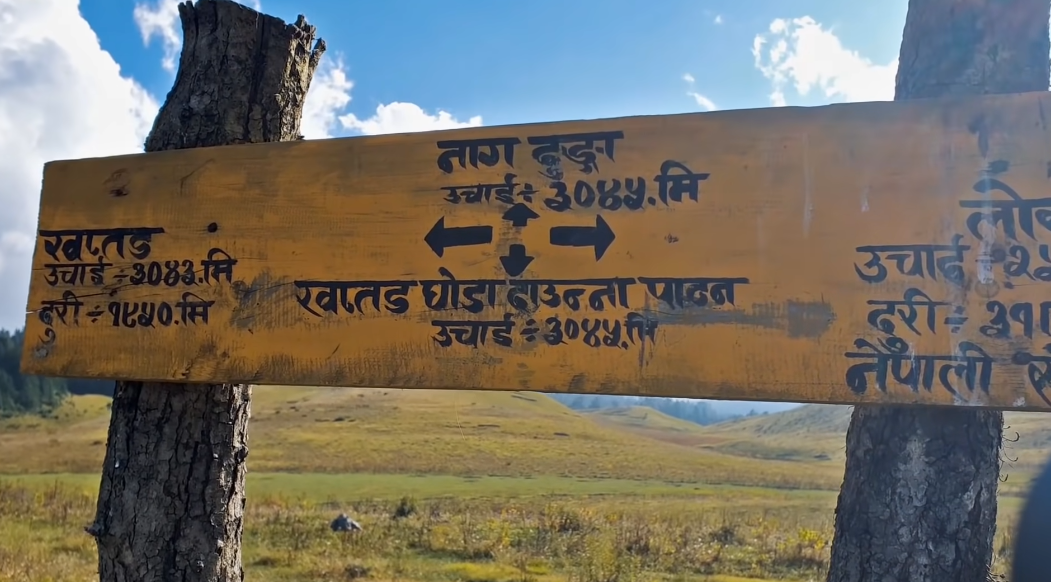
We hike to the highest point of the trek, Sahasralingha (3,200m). The open views here are unparalleled. On a clear day, the 7000m peaks of Api and Saipal seem close enough to touch. Sahasralingha is a collection of stone pillars and shrines. We also visit Nagdhunga (Snake Stone) and the Triveni Temple, where three rivers meet. This temple is a significant pilgrimage site.
Spiritual Depth: Watching the rivers merge is a powerful metaphor for the unity of existence. Many pilgrims leave small coins or pebbles as offerings.
Day 9: Trek back to Jhingrana – The Descent
Altitude: 2,300m
Activity: 7-hour trek
We retrace our steps down through the forest. The descent is easier on the lungs but harder on the knees. The forest smells different in the morning sun—earthy and rich. We enjoy our last views of the meadows before they disappear behind the oak trees. We reach Jhingrana by late afternoon, tired but spiritually fulfilled.
Day 10: Drive to Dhangadhi – Return to the Plains
Altitude: 109m
Activity: 7-8 hour drive
The long drive back gives us time to reflect. The dust settles on our boots, a souvenir of the Khaptad soil. We pass through Silgadhi again, perhaps stopping for a local Dal Bhat lunch. The transition back to the Terai heat feels strange after the cool mountain air.
Day 11: Fly back to Kathmandu – Farewell
Altitude: 1,400m
Activity: 1-hour flight
We catch a morning flight back to Kathmandu. As the plane ascends, if the weather holds, you might get one last glimpse of the Himalayas. The rest of the day is free for shopping or relaxation. A farewell dinner is often organized to celebrate the completion of the Khaptad National Park Trek.
Day 12: Final Departure – Safe Travels
Activity: Airport Transfer
You will be transferred to the airport three hours before your flight. We bid you farewell, hoping the peace of Khaptad stays with you.
What to Pack: A Comprehensive Gear List
Trekking in the Far West requires self-sufficiency. While teahouses exist, bringing a Khaptad National Park camping gear setup is highly recommended for comfort and hygiene. The Khaptad National Park accommodation is basic (homestays or camps), so be prepared.
Clothing
Camping & Sleeping
Health & Hygiene
Miscellaneous
Expert Knowledge, Safety, and Altitude Realism
The Khaptad National Park Trek difficulty is often underestimated because it doesn’t reach extreme altitudes (like Everest Base Camp). However, the terrain is deceptive, and the remoteness is a risk factor.
Understanding the Terrain
The trail from Jhingrana to Bichpani is steep and often slippery, especially after rain. It is not a manicured path; it is a local trail used by villagers and pilgrims. It requires focus. The section on the plateau is flat but prone to sudden weather changes. Fog can roll in within minutes, reducing visibility to zero.
Altitude Awareness
While the maximum altitude is roughly 3,200m, the climb from Jhingrana (2,300m) to Bichpani (2,905m) is rapid.
Wildlife Safety
The park is home to leopards and bears. Attacks are rare, but precautions are necessary.
Medical Evacuation
The nearest hospital with decent facilities is in Dhangadhi or Kathmandu. Evacuation from the park is difficult and expensive. It takes hours to drive from Jhingrana to a road that can handle an ambulance. Therefore, Khaptad National Park travel insurance that covers emergency helicopter evacuation up to 6,000m is mandatory.
Why Trek With Himalayan Eco Culture?
When you choose Himalayan Eco Culture, you aren’t just buying a tour package; you are supporting the local economy of the Far West, one of Nepal’s most underdeveloped regions. We are not just a trekking agency; we are custodians of the Khaptad legacy.
Our Commitment to You
Safety Policy and Credentials
Your safety is our priority. We carry a comprehensive first aid kit, a satellite phone for emergencies, and ensure all our staff are insured. We never compromise on equipment quality, providing weather-proof tents and comfortable sleeping mats.
Guide Credentials
Our guides are certified by the Nepal Government Ministry of Tourism. They have completed the Trekking Guide Training and hold Wilderness First Aid certificates. They are fluent in English and knowledgeable about the local flora, fauna, and culture.
Frequently Asked Questions (FAQ)
Q1: Do I need a special permit for the Khaptad National Park Trek?
Yes, you need two main permits: the Khaptad National Park Entry Permit (approx. NPR 1,000 for foreigners) and the TIMS (Trekkers’ Information Management System) card. We handle all of this for you as part of the Khaptad National Park permit process.
Q2: Is the Khaptad Trek suitable for beginners?
Yes, the Khaptad National Park Trek difficulty is rated as moderate. While it requires 5-8 hours of walking daily on steep terrain, it does not involve technical climbing or high-altitude glacier crossings. Beginners with good stamina can complete it.
Q3: What kind of food is available on the trek?
Food options are simple but nutritious. You can expect Dal Bhat (rice and lentil soup), noodles, potatoes, and local flatbread. Because of the park’s religious rules, no meat, eggs, or alcohol is served within the core area.
Q4: How difficult is the drive from Dhangadhi to Silgadhi?
The drive is scenic but rough. It is a dirt road for much of the way, and during the monsoon, landslides can cause delays. We use sturdy jeeps for this journey. It takes about 7-8 hours.
Q5: Can I do the Khaptad Trek solo?
You can, but it is not recommended. The trails are not always well-marked, and facilities are sparse. Having a local guide not only ensures your safety but also enriches your experience by connecting you with the local culture and explaining the history of the Khaptad Baba Ashram.
Q6: Is there internet and mobile connectivity in Khaptad?
Mobile connectivity (Ncell and NTC) is sporadic. There might be signal in some high points near the army post, but generally, you should expect to be offline. This is part of the charm!
Q7: What is the cost of the trek?
The Khaptad National Park Trek cost varies based on group size and services (camping vs. tea house). Generally, expect to pay between $800 and $1200 USD for a 12-day all-inclusive package from Kathmandu.
Q8: Are there ATM facilities in the villages?
No. There are no ATMs once you leave Kathmandu or Dhangadhi. You must withdraw all necessary cash in Kathmandu or Dhangadhi before starting the drive to Jhingrana.
Q9: What should I do if I encounter a leech?
Leeches are common in the forest sections, especially during the monsoon or if it has rained recently. Wear leech socks (treated with salt or insect repellent). If one attaches to you, don’t pull it off forcefully; use a lighter, salt, or your fingernail to break the seal.
Q10: Can I extend the trek?
Yes. Many extensions are possible, such as hiking towards the Api Saipal Base Camp or adding a side trip to Rara Lake. Discuss this with our agency for a customized Khaptad National Park itinerary.
Start Your Journey to the Mystic West
The Khaptad National Park Trek is not just a walk in the woods; it is a retreat for the soul. It offers a rare combination of natural beauty, cultural immersion, and spiritual depth that is becoming harder to find in our modern world. It is a place where you can truly disconnect and reconnect with yourself.
Are you ready to step off the beaten path and discover the secret garden of Nepal? The meadows are green, the mountains are calling, and the silence is waiting. Let Himalayan Eco Culture guide you home to the mountains.
Follow us on Facebook @Himalayan eco culture for daily updates and community stories.
Connect on LinkedIn @deep-rai-7aa3432b3 for real-time expedition photos.
Book Your Trek Today!
Contact us via WhatsApp at +977-9860745982 to inquire about available dates, custom itineraries, and group discounts.
Why wait? The mountains are waiting for you.
Planning a trek to Khaptad requires information. The Khaptad National Park Trek cost varies depending on whether you choose a camping trek or a teahouse trek. Many travelers search for Khaptad National Park best time to visit to avoid the monsoon rains. The Khaptad National Park permit cost is modest but essential for entry. When looking for off the beaten path treks in Nepal, Khaptad is a top choice alongside the Rara Lake trek. The Khaptad Baba Ashram is a major spiritual attraction. The Silgadhi to Khaptad trek route involves a scenic drive. Trekkers often ask about the Khaptad National Park accommodation options, ranging from basic homestays to camping. The Api Saipal Himal range views are spectacular from Sahasralinga. The Khaptad Daha lake holds religious significance. For those interested in religious trekking in Nepal, the Triveni Temple is a key site. The Khaptad National Park entry fee supports conservation efforts. The Dhangadhi to Silgadhi drive can be bumpy. Khaptad National Park weather in October is ideal. Khaptad National Park trekking map downloads are useful for navigation. The Khaptad National Park flora and fauna are diverse and unique. The Khaptad National Park wildlife includes musk deer and leopards. How to reach Khaptad National Park is a common query. Khaptad National Park camping allows for flexibility. The Jhingrana to Bichpani trek is steep. Bichpani to Khaptad National Park is a scenic walk. The Khaptad National Park transport options include flights and jeeps. Khaptad National Park trek guide services are highly recommended. The Khaptad National Park itinerary can be customized. Khaptad National Park trek difficulty level is moderate. Khaptad National Park trek reviews praise the untouched beauty. The Far West Nepal trekking experience is unique. Khaptad National Park travel tips suggest carrying cash. The Khaptad National Park trek preparation should include cardio exercises. Best trekking agency for Khaptad is one with local knowledge. Khaptad National Park solo trek is possible but challenging. Khaptad National Park group trek discounts are available. The Khaptad National Park biodiversity is protected. The Khaptad National Park geography is diverse. Khaptad National Park history is fascinating. The Khaptad National Park routes are well-defined. Khaptad National Park teahouses are basic. Khaptad National Park guide salary is included in the package. Khaptad National Park trekking gear should be lightweight. The Khaptad National Park altitude profile is gradual. Khaptad National Park monsoon trekking is not recommended. Khaptad National Park winter trekking requires warm clothes. Khaptad National Park spring trekking offers rhododendrons. Khaptad National Park autumn trekking offers clear skies. Khaptad National Park summer trekking is wet. Khaptad National Park travel insurance is mandatory. Khaptad National Park trekking permit regulations must be followed. Khaptad National Park restrictions on alcohol are strict. Khaptad National Park photography is rewarding. Khaptad National Park birdwatching is world-class. Khaptad National Park herbs have medicinal value. Khaptad National Park plants are numerous. Khaptad National Park trees include oak and rhododendron. Khaptad National Park animals include the barking deer. Khaptad National Park bird species are over 270. Khaptad National Park flowers are beautiful. Khaptad National Park meadows are vast. Khaptad National Park grasslands are called Patans. Khaptad National Park forest is dense. Khaptad National Park rivers are crystal clear. Khaptad National Park temples are sacred. Khaptad National Park festivals attract pilgrims. Khaptad National Park culture is rich. Khaptad National Park people are hospitable. Khaptad National Park tradition is preserved. Khaptad National Park lifestyle is simple. Khaptad National Park economy depends on agriculture. Khaptad National Park tourism is developing. Khaptad National Park conservation is successful. Khaptad National Park management is effective. Khaptad National Park history dates back decades. Khaptad National Park legend involves Khaptad Baba. Khaptad National Park myth is fascinating. Khaptad National Park spirituality is profound. Khaptad National Park meditation is practiced here. Khaptad National Park yoga is possible. Khaptad National Park peace is guaranteed. Khaptad National Park silence is golden. Khaptad National Park beauty is untouched. Khaptad National Park magic is real. Khaptad National Park adventure is unforgettable. Khaptad National Park experience is life-changing.
Duration: 16 Days
Nar Phu Valley Trek: The Ultimate Guide to Nepal’s Hidden Tibetan Frontier "Entering the Forgotten Corridors of the Himalayas" There...

Duration: 4 Days
KHUMAI DANDA TREK: The Ultimate 4-Day Himalayan Adventure "KHUMAI DANDA TREK also Known as the Machhapuchhre Model Trek A Complete...

Duration: 8 Days
"The Kori Danda Trek Trek: A Comprehensive Guide to Nepal’s Best Kept Secret" [caption id="attachment_2739" align="aligncenter" width="728"] make a wish...

Duration: 14 Days
Makalu Yeti Foot Trail Trek: Complete Guide Table of Contents Why Trek Around Makalu (And Why It Still Feels Wild)...