Kanchenjunga Circuit Trek
- DURATION: 18 DAYS


Kanchenjunga Circuit Trek: The Ultimate Guide to Nepal’s Remote Himalayan Wilderness
“Into the Shadow of the Third Highest Peak Kanchenjunga Circuit Trek”
There is a profound difference between trekking in the Annapurna region and embarking on the Kanchenjunga Circuit Trek. In Annapurna, you are part of a flowing river of humanity; in Kanchenjunga, you are a solitary drop in a vast, ancient ocean of rock and ice.
The Kanchenjunga Circuit trek is not merely a walking holiday; it is an expedition into one of the last remaining wilderness frontiers in Nepal. Visiting both the North and South Base Camps of Mount Kanchenjunga – the world’s third-highest mountain at 8,586 meters– this route offers an intimacy with the Himalayas that few other trails can match. Because this is a remote area trek in the far northeastern corner of Nepal, bordering Sikkim (India), it remains largely untouched by mass tourism.
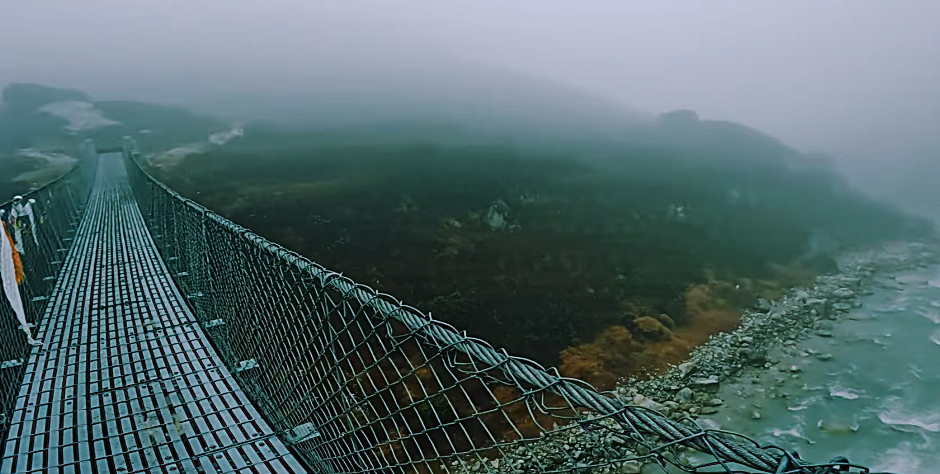
I remember my first time crossing the suspension bridge near Sekathum, the humidity of the subtropical valley clinging to my skin, while far above, the glacial peaks pierced the azure sky. It is a land of stark contrasts. Here, you walk past popular glacial lakes, through rhododendron forests that blaze with red and pink in spring, and over high passes where the air is thin and crisp. But beyond the landscape, the Kanchenjunga Circuit Trek is a spiritual journey. It is a route blessed by Guru Rinpoche (Padmasambhava), the “Second Buddha,” who is said to have hidden treasures in the mountains, consecrating the land as a beyul (a hidden valley).
This pillar article is designed to be your definitive resource. We will navigate every aspect of the trek from the narrative arc of the trail to the nitty-gritty of permits and packing. Whether you are a seasoned trekker looking for your next challenge or an adventurer seeking solitude, this guide provides the expertise and local knowledge you need to safely experience the magic of the Kanchenjunga massif.
Kanchenjunga Circuit Trek Highlights
Before we dive into the daily grind of the trail, let’s look at what makes the Kanchenjunga Circuit Trek a once-in-a-lifetime experience:
Trip Facts at a Glance
Detailed Itinerary: A Day-by-Day Narrative
The following itinerary is crafted to balance acclimatization with the desire to explore. It is a narrative of the trail, blending logistical details with the experiential reality of walking in the shadow of giants.
Day 1: Kathmandu to Bhadrapur (Flight) to Fikkal/Kanyam (Drive)
Altitude: 1,500 m / 4,920 ft
Drive Time: 3 to 4 hours
Flight Time: 45 to 60 minutes
The adventure begins not on the trail, but in the skies. After breakfast, the flight to Bhadrapur offers a free mountain flight, revealing the rolling hills and distant snow-capped peaks of Nepal. Bhadrapur, located in the humid lowlands (Terai), feels like a different country compared to Kathmandu.
From here, we drive to Fikkal or Kanyam. This region is the heart of Nepal’s tea plantation industry. The drive is scenic, winding through lush green gardens that seem to ripple in the breeze. The air here smells of wet earth and tea leaves—a soothing prelude to the ruggedness ahead. We overnight in a local hotel, enjoying the last luxuries of hot showers and reliable electricity.
Day 2: Fikkal/Kanyam to Taplejung (Drive)
Altitude: 1,820 m / 5,971 ft
Drive Time: 4 to 5 hours
We leave the tea gardens behind as the road begins to climb aggressively into the foothills. The drive to Taplejung, the district headquarters and official gateway to the Kanchenjunga Circuit Trek, is an adventure in itself. The road is a mix of paved and gravel surfaces, often narrow, hanging precariously over the Tamor River valley.
As we ascend, the landscape transforms. Terraced farmlands carved into steep hillsides appear, interspersed with cardamom plantations—a major cash crop for the local Limbu community. Taplejung is a bustling town compared to what lies ahead. It has the last ATM, pharmacies, and shops. Expert Tip: Use this time to buy any forgotten snacks, SIM cards (Ncell or NTC works best here), or batteries. The cultural presence here is predominantly Limbu, and you will notice traditional wooden houses with intricate carvings that differ significantly from the Sherpa architecture found in the Everest region.
Day 3: Taplejung to Sekathum
Altitude: 1,650 m / 5,413 ft
Trek Time: 5 to 6 hours
The Kanchenjunga Circuit Trek officially begins. The trail descends steeply from Taplejung to the Tamor River Valley. The heat and humidity can be surprising for trekkers expecting cold mountains immediately. We follow the Ghunsa Khola upstream.
This section is physically demanding due to the steep downhill sections and stone steps. We pass through subtropical forests and rural settlements where farmers tend to millet and maize fields. The sight of Limbu and Rai villagers carrying heavy loads in bamboo baskets (doko) is a humbling reminder of the toughness of mountain life.
At the end of the day, we enter the Kanchenjunga Conservation Area. This protected zone is a haven for biodiversity. We cross several suspension bridges that sway over roaring turquoise rivers. Sekathum is a small riverside village with basic teahouses. The facilities here are simple—twin-sharing rooms with thin mattresses and shared squat toilets. It is the first night of “trekking reality,” and the sound of the river puts you to sleep.
Day 4: Sekathum to Amjilosa
Altitude: 2,510 m / 8,235 ft
Trek Time: 6 to 7 hours
Today is one of the steepest ascents in the early phase of the trek. The trail climbs out of the valley, often doubling back on itself as it navigates waterfalls and cliffs. We enter a dense forest of bamboo and rhododendron. If you are trekking in spring, the rhododendrons create a canopy of fire-red blooms.
The path requires careful foot placement, especially on narrow cliffside sections. This is Red Panda territory, though spotting this shy mammal is a rarity. As we gain altitude, the air cools, and the vegetation changes. We may see signs of yak herders or temporary shelters used during grazing seasons.
Amjilosa is tiny—a cluster of wooden cabins. The evenings get cold here, and the dining room, usually warmed by a yak-dung or wood stove, becomes the social hub. Trekkers gather to share stories and dry wet socks.
Day 5: Amjilosa to Gyabla
Altitude: 2,730 m / 8,956 ft
Trek Time: 3 to 4 hours
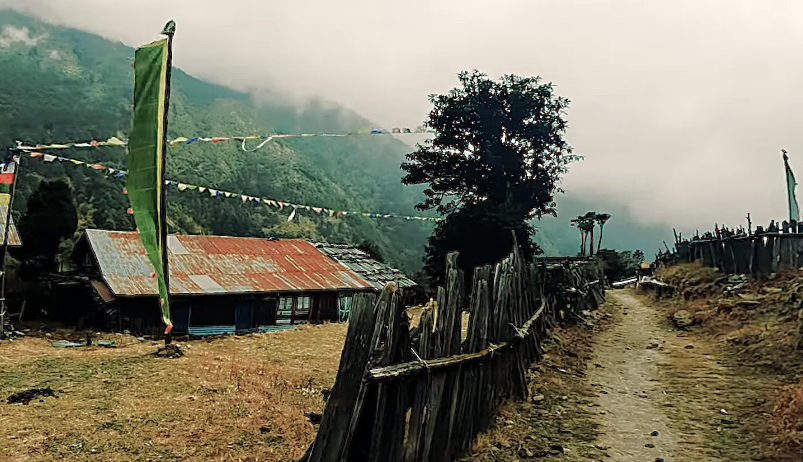
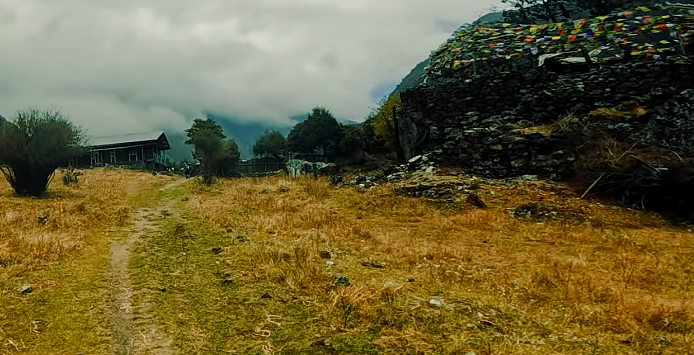
After the exertion of the previous day, the walk to Gyabla is a pleasant relief. The trail undulates through forests of pine, bamboo, and oak. We begin to notice a cultural shift. The villages look more Tibetan; mani walls (stone walls with Buddhist inscriptions) line the path, and prayer flags flutter in the wind.
We might spot yaks grazing on the hillsides—the true icons of the high Himalayas. Gyabla is a traditional village that feels frozen in time. The stone houses are built close together, protecting inhabitants from the harsh winter winds. It is a short day, allowing for rest and recovery before the higher altitudes.
Day 6: Gyabla to Ghunsa
Altitude: 3,595 m / 11,794 ft
Trek Time: 3 to 4 hours
We are now entering the heart of the high Himalayas. The trail continues through forests, passing Phale Village. Phale has a poignant history; it was established as a Tibetan refugee camp decades ago following the Chinese occupation of Tibet. Today, it serves as a winter settlement. It is an excellent place to observe Tibetan handicrafts and the resilience of a displaced community.
We arrive in Ghunsa, the largest village in the region. It sits in a flat valley floor and is a hub for the Kanchenjunga Circuit Trek. Ghunsa has a police station, a health post, and the Kanchenjunga Conservation Office. Mobile signals and internet are available here (though sporadic).
Ghunsa is culturally significant. The locals are predominantly Sherpa and Bhote, followers of Tibetan Buddhism. The village has a beautiful monastery, and the sound of chanting monks often drifts through the air. Safety Note: At nearly 3,600 meters, it is crucial to hydrate and move slowly.
Day 7: Acclimatization Day in Ghunsa
Altitude: 3,595 m / 11,794 ft
We take a rest day for acclimatization. “Climb high, sleep low” is the mantra. We take a packed lunch and hike up to a ridge overlooking the village. The view of Jannu Peak (Kumbhakarna) is mesmerizing. Jannu is a technical climber’s dream, but for trekkers, its sheer verticality is intimidating.
We also visit the local monastery to understand the spiritual depth of the region. The lamas (monks) here are friendly and often offer butter tea to visitors. This day is essential for adjusting to the reduced oxygen levels before we push toward the North Base Camp.
Day 8: Ghunsa to Kambachen
Altitude: 4,100 m / 13,451 ft
Trek Time: 3 to 4 hours
We are now in high-altitude terrain. The landscape becomes stark and dramatic. The views of Jannu Himal dominate the skyline. The trail is gentle initially but enters a green glacier valley. We are deep into Snow Leopard territory. While sightings are extremely rare, spotting one would be the ultimate prize for a wildlife enthusiast.
We pass a waterfall and traverse a landslide-prone area where caution is paramount. Kambachen is a seasonal settlement with basic lodges. It is cold here, often freezing at night. The teahouses use yak dung stoves, which provide a distinct smoky warmth.
Day 9: Acclimatization Day in Kambachen
Altitude: 4,100 m / 13,451 ft
Another critical acclimatization day. We hike up a ridge to catch our first glimpse of the Kanchenjunga massif up close. The view is worth every step. We can see the massive walls of the mountain stretching across the horizon.
The terrain here is rugged—rocks, scree, and sparse vegetation. It feels like walking on another planet. We return to the lodge for hot soup and rest. Expertise Note: If anyone feels symptoms of Acute Mountain Sickness (AMS) headache, nausea, dizziness—this is the point to make a decision. Descending to Ghunsa is the only cure.
Day 10: Kambachen to Lhonak
Altitude: 4,785 m / 15,698 ft
Trek Time: 3 to 4 hours
The trail today takes us over the moraine of the Kanchenjunga Glacier. Walking uphill over large boulders is tiring, but the views on both sides are incredible. We pass summer yak pastures, but no permanent settlements.
Lhonak is a windswept collection of stone huts near the glacier. The air is thin, and breathing is noticeably harder. Water here must be boiled or purified from glacial streams. We eat an early dinner and prepare for the climax of the northern leg.
Day 11: Day Trip to Kanchenjunga North Base Camp (Pangpema)
Altitude: 5,143 m / 16,873 ft
Trek Time: 7 to 8 hours (Round Trip)
This is the day we have been working toward. We wake before dawn, bundled in down jackets, and head toward Pangpema. The trail is rough, crossing icy streams and moraines.
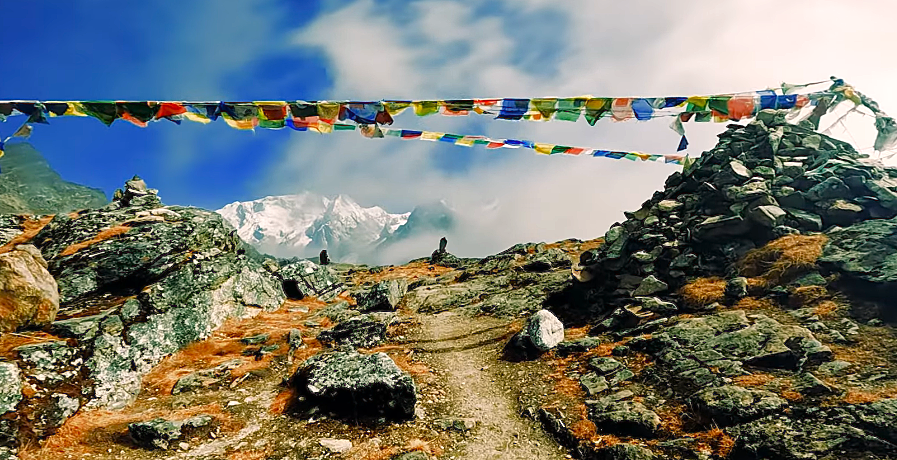
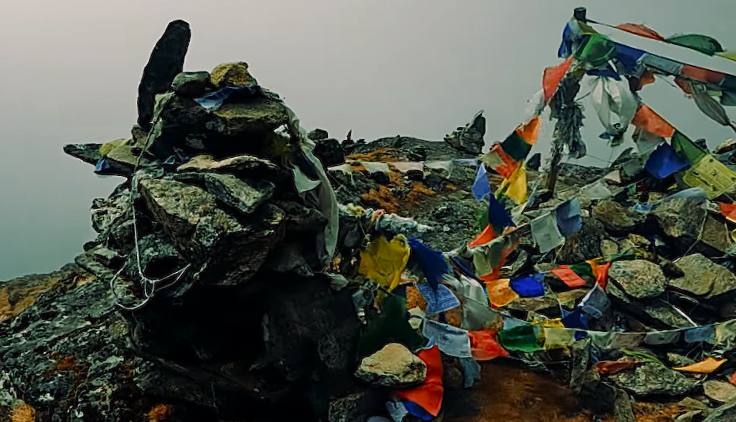
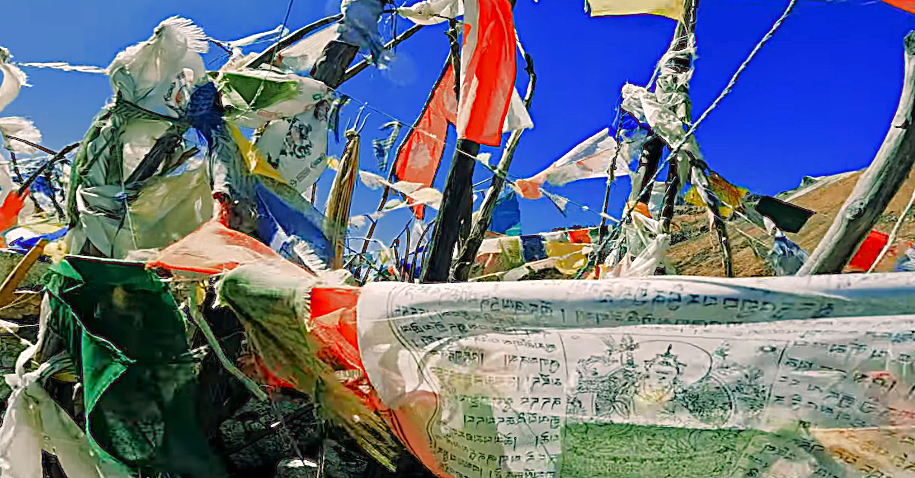
Reaching Kanchenjunga North Base Camp (Pangpema) is a surreal experience. Standing at 5,143 meters, we are face-to-face with the third-highest mountain on Earth. The sheer scale of the Kanchenjunga massif, along with peaks like Tent Peak and Chang Himal, is overwhelming. Prayer flags flutter violently in the wind, carrying the prayers of thousands of pilgrims.
Pangpema is considered a sacred site. Legend has it that the mountain is the abode of a deity. We spend time here in silence, absorbing the majesty, before descending back to Lhonak for the night. The descent is faster but hard on the knees.
Day 12: Lhonak to Ghunsa
Altitude: 3,595 m / 11,794 ft
Trek Time: 7 hours
We retrace our steps, but the perspective is different. Descending allows us to breathe easier and notice details we missed on the way up. We pass Ramtang and Kambachen again. The drop in altitude brings a return of appetite and energy. Back in Ghunsa, we enjoy a hot shower (solar heated) and a hearty meal.
Day 13: Ghunsa to Sele Le
Altitude: 4,390 m / 14,402 ft
Trek Time: 5 hours
Now we veer off the main path to cross the high passes that connect the North and South sides of the circuit. This is the unique beauty of the Kanchenjunga Circuit Trek. We climb through forests and along a grassy ridge. From here, we can see Ghunsa and Phole villages far below, and Mt. Makalu in the distance. Sele Le is a high camp with basic shelter. It is cold and exposed, but the sunset views are spectacular.
Day 14: Sele Le to Cheram via Sinion La & Mirgin La Passes
Altitude: Cheram (3,870 m) / Passes (approx. 4,450m – 4,830m)
Trek Time: 7 to 8 hours
This is one of the most challenging and rewarding days of the trek. We start early, ascending to Sinion La (4,450m). The trail then takes us along a ridge to Mirgin La (4,480m) and Sinelapche La (4,830m).
From these passes, the views are arguably the best in Nepal. We can see Kanchenjunga, Jannu, Makalu, and even distant glimpses of Everest. The sense of being on top of the world is palpable. We then descend steeply along a small trail to Cheram. This is a long day, requiring stamina and good boots. Cheram is a quiet settlement, the only one on this route.
Day 15: Day Trip to Kanchenjunga South Base Camp (Oktang) and Ramche
Altitude: 4,580 m / 15,026 ft
Trek Time: 6 hours
We trek to Ramche for lunch, and then continue for about 40 minutes to reach Kanchenjunga South Base Camp (Oktang). The South Base Camp is right on the edge of the Yalung Glacier. The view of the South Face of Kanchenjunga is daunting—a wall of ice and rock rising vertically.
We visit Oktang Monastery, perched precariously on a rock. It is a pilgrimage site, and the energy here is profound. We return to Cheram for the night, tired but spiritually fulfilled.
Day 16: Cheram to Torongding
Altitude: 2,080 m / 6,824 ft
Trek Time: 4 hours
We begin the long descent. The trail drops steeply from the alpine zone into temperate forests. We turn west into dense rhododendron and pine forests. This area is rich in wildlife; keep an eye out for the colorful Himalayan Monal (Danphe).
The trail has steep steps and can be slippery. Torongding is a small settlement with limited amenities. It feels good to be back in the oxygen-rich lower altitudes.
Day 17: Torongding to Rani Pul (Khebang)
Altitude: 1,430 m / 4,690 ft
Trek Time: 6 to 7 hours
We are now in the lowlands again. The environment is lush and humid. We walk through bamboo groves and cardamom plantations. Warning: Leeches are common here, especially after rain. Wear leech socks or gaiters.
We pass through Chhetri and Limbu settlements. The architecture changes to traditional mud houses with thatched roofs. It feels like walking through a different Nepal—rural, agricultural, and warm. Rani Pul has jeep access, marking the end of the remote walking section.
Day 18: Rani Pul to Taplejung (Drive) & Overnight at Khamdime
Altitude: Taplejung (1,820 m)
Drive Time: 4 hours
A local 4WD jeep takes us back to Taplejung. The drive follows the Kabeli River. The road can be rough, but the scenery of green ridges and cardamom farms is lovely. In Taplejung, we bid farewell to the high mountains. We drive further down to Khamdime for the night, celebrating the completion of the circuit with a feast of Dal Bhat and maybe a local Raksi (millet wine).
Day 19: Khamdime to Bhadrapur to Kathmandu (Flight)
Drive: 6-7 hours to Bhadrapur
Flight: 50 minutes to Kathmandu
We drive through Ilam, famous for its tea gardens. The transition from the Himalayas back to the chaotic, vibrant streets of Kathmandu is jarring but welcome. You have completed the Kanchenjunga Circuit Trek.
Comparison: Kanchenjunga Circuit vs. Annapurna Circuit
For trekkers deciding between Nepal’s giants, here is a comparison.
Feature
Kanchenjunga Circuit Trek
Annapurna Circuit
Crowds Extremely Remote. Less than 2% of Nepal’s trekkers visit here. Popular. Can be crowded, especially in peak seasons.
Landscape Subtropical to Glacial. Very wild and rugged. Diverse, but road construction has shortened the “wild” sections.
Culture Limbu & Tibetan Buddhism. Very traditional. Gurung, Manang, Thakali. Tourist infrastructure is well-developed.
Difficulty Challenging. Longer days, basic lodges, high passes. Moderate to Challenging. Better facilities reduce the difficulty.
Cost Higher (requires Restricted Area Permits & Guide). Lower (permits are cheaper, independent trekking possible).
Altitude Max 5,143m (Pangpema). Max 5,416m (Thorong La).
If you seek solitude and raw adventure, the Kanchenjunga Circuit Trek is the clear winner.
Weather & Best Time to Trek
Pre-Monsoon (March to May)
Post-Monsoon (September to November)
Winter (December to February)
Monsoon (June to August)
Detailed Packing List for Kanchenjunga Circuit Trek
Packing for a remote trek is an art. You must be self-sufficient but not overloaded.
Gear & Equipment
Clothing
Medical & Hygiene
Electronics
Why Trek With Us?
We are not just travel agents; we are locals from the Eastern Himalayas. Our guides have walked the Kanchenjunga Circuit Trek trails since childhood. They know the hidden safe routes through the glaciers and the best spots for a cup of salt-butter tea.
Expertise: Safety First
The Kanchenjunga Circuit Trek is graded “Challenging.” We do not take this lightly.
Authoritativeness: Preserving Culture
We work closely with the Kanchenjunga Conservation Area Project. We ensure our groups adhere to the “Leave No Trace” principles. We support local tea houses and employ local porters, ensuring your tourism dollars benefit the community directly.
Trust: Transparency & Sustainability
There are no hidden costs. We provide a clear breakdown of permits, wages, and logistics. We are committed to sustainable tourism, ensuring the Kanchenjunga Circuit Trek remains pristine for future generations.
FAQs
Q: Do I need a guide for the Kanchenjunga Circuit Trek?
A: Yes. The region is a “Restricted Area” under Nepal immigration law. You must trek with a licensed guide and obtain a Restricted Area Permit (RAP).
Q: How difficult is the Kanchenjunga Circuit Trek?
A: It is considered strenuous. You need a high level of fitness. The trails are long, often steep, and the high altitude poses a challenge. Previous high-altitude trekking experience is highly recommended.
Q: Are there ATMs on the trail?
A: No. The last ATM is in Taplejung. You must carry enough cash (Nepali Rupees) for the entire trek to pay for hot showers, charging devices, and extra meals.
Q: What kind of accommodation can I expect?
A: Accommodation is in basic tea houses. Rooms are twin-sharing with thin mattresses. Toilets are often shared squat style. Luxury is non-existent, which adds to the authentic adventure.
Q: Is altitude sickness a risk?
A: Yes. You will sleep above 3,500m for several nights and reach over 5,100m. Proper acclimatization, hydration, and a slow pace are essential to prevent AMS.
Ready to Explore the Wild?
The Kanchenjunga Circuit Trek is a commitment—a promise to step away from the crowded trails and into a world where nature still rules supreme. It is a journey that tests your physical limits and expands your spiritual horizons.
Don’t let the logistics hold you back. We handle the permits, the porters, and the safety, so you can focus on the views and the culture.
Book Your Adventure Today
WhatsApp us: +977-9860745982 for a quick response and itinerary customization.
Follow us on Facebook: @Himalayan eco culture for daily updates and community stories.
Connect on LinkedIn: @deep-rai-7aa3432b3 for real-time expedition photos and professional networking.
Join us on the roof of the world. The mountains are calling.
Price
Duration: 16 Days
Nar Phu Valley Trek: The Ultimate Guide to Nepal’s Hidden Tibetan Frontier "Entering the Forgotten Corridors of the Himalayas" There...

Duration: 4 Days
KHUMAI DANDA TREK: The Ultimate 4-Day Himalayan Adventure "KHUMAI DANDA TREK also Known as the Machhapuchhre Model Trek A Complete...

Duration: 12 Days
"The Secret Garden of Nepal: A Spiritual and Ecological Odyssey to Khaptad National Park Trek" Beyond the Beaten Path: Journey...

Duration: 8 Days
"The Kori Danda Trek Trek: A Comprehensive Guide to Nepal’s Best Kept Secret" [caption id="attachment_2739" align="aligncenter" width="728"] make a wish...